The Leadership Skill We Don’t Talk About Enough
Most workplace conflict isn’t actually about the conflict itself.
It’s about what happens after.
The resentment that lingers after a difficult conversation. The frustration that quietly builds after feeling dismissed. The stress of navigating personalities, tension, misunderstandings, and leadership challenges day after day without ever fully releasing them.
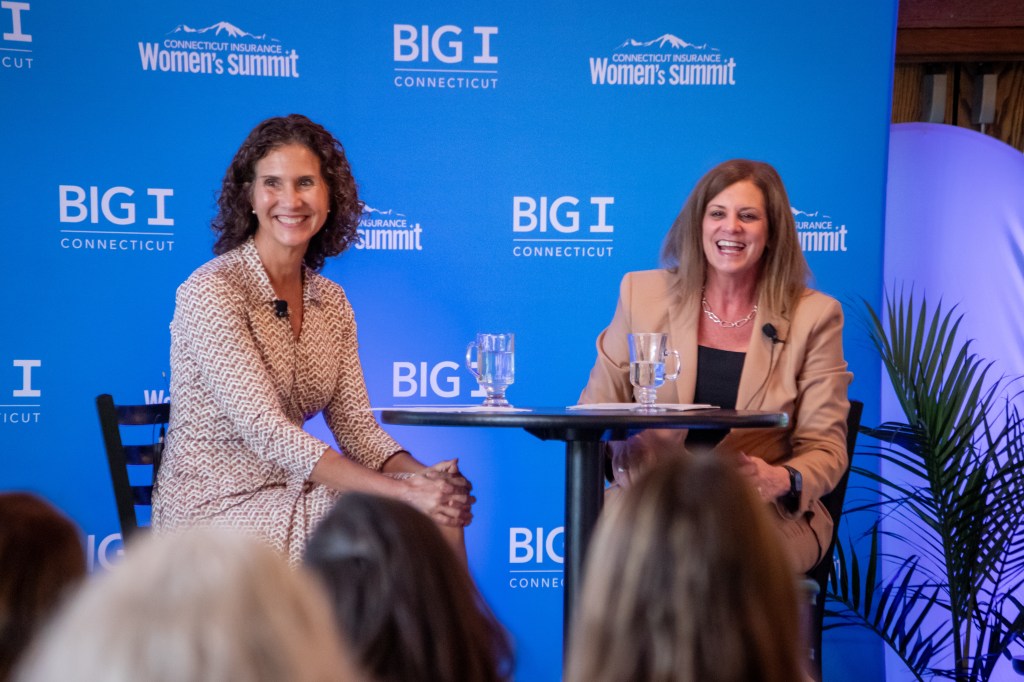
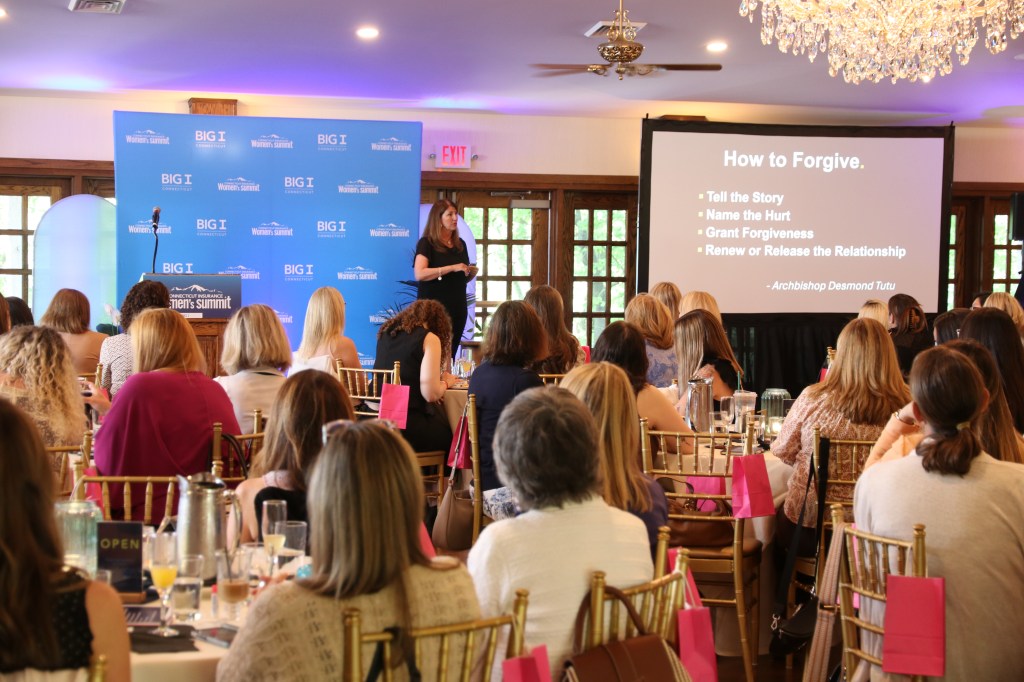
At the Connecticut Women’s Summit 2026, keynote speaker Claudia St. John challenged attendees to think differently about one of the least discussed, but most powerful, leadership skills in the workplace: forgiveness.
Not forgiveness as weakness.
Not forgiveness as forgetting.
And certainly not forgiveness as excusing harmful behavior.
But forgiveness as a tool for personal freedom, emotional intelligence, and stronger leadership.
The Hidden Cost of Workplace Conflict
During her keynote, Claudia shared a staggering statistic: nearly three-fourths of employees feel their managers lack the skills necessary to navigate workplace challenges effectively.
Even more alarming, she explained that three-fourths of employees who voluntarily leave their jobs are not actually leaving the company — they’re leaving their manager.
“Our supervisors and managers are our absolute weakest link in every business,” Claudia said.
That reality carries enormous consequences. Workplace stress and unresolved conflict contribute to burnout, absenteeism, turnover, lawsuits, and declining mental health — costing businesses an estimated $350 billion last year alone.
And yet, most workplaces still fail to teach people how to navigate conflict in healthy, emotionally intelligent ways.
Why We Don’t Talk About Emotional Harm at Work
One of the most powerful moments of Claudia’s keynote was her challenge to the idea that workplace harm is somehow insignificant.
“There’s no harm in the workplace? I think that’s misguided,” she said.
Workplace harm doesn’t always look dramatic. Sometimes it’s being undermined repeatedly. Being dismissed. Being excluded from opportunities. Being forced to navigate difficult personalities or toxic leadership dynamics every single day.
And for many women in leadership, those experiences can become deeply personal.
Claudia shared her own experience of losing the trajectory of a promising early career because a male supervisor believed a woman did not belong in a position of visibility and influence. The anger and resentment she carried afterward followed her long after she left the role.
“I brought my frustration and resentment with me into the next jobs,”
That lingering emotional weight is something many professionals know all too well.
Forgiveness Is Not “Forgive and Forget”
For Claudia, forgiveness is often misunderstood.
“Forgive and forget is a load of nonsense,” she explained bluntly.
Forgiveness does not mean pretending something didn’t happen.
It does not mean restoring trust blindly.
And it does not mean excusing harmful behavior.
Instead, forgiveness is the intentional decision to stop allowing pain, anger, and resentment to control your emotional wellbeing.
“When you forgive, you release them from having power over you,” Claudia said.
That distinction resonated deeply throughout the room.
Because unresolved resentment doesn’t only damage relationships, it damages the individual carrying it.
“It doesn’t hurt them. It only hurts you.”
The Physical Cost of Holding On
One of the most eye-opening parts of the keynote was Claudia’s discussion around the physical impact of resentment and chronic stress.
“The more resentment you accumulate, the heavier your ‘backpack’ becomes,” she explained.
That emotional weight, she noted, affects far more than mood or workplace morale. It impacts sleep, cardiovascular health, digestion, anxiety levels, and overall wellbeing.
“Not forgiving creates stress on your body that can shorten your life.”
In a professional world where burnout and stress are increasingly normalized, that message felt especially urgent.
What Forgiveness Has to Do With Leadership
Perhaps the most compelling part of Claudia’s keynote was the connection she drew between forgiveness and workplace culture.
Without forgiveness, workplaces become environments driven by fear, defensiveness, gossip, blame, and self-protection.
“Who’s going to step up and step out if they don’t know what the consequences are going to be?” Claudia asked.
When employees fear punishment for mistakes, creativity disappears. Accountability weakens. Communication breaks down.
But cultures rooted in empathy, accountability, and grace create something entirely different.
“We can share our vulnerability because there’s no negative repercussion — because we forgive one another,” she shared while describing her own company culture.
That kind of environment allows people to take risks, communicate honestly, and grow without fear.
“Authentic workplaces happen when people know they don’t have to pretend to be something they’re not.”
Forgiveness as a Leadership Skill
Forgiveness may not be the first skill people associate with leadership development.
But maybe it should be.
“Forgiveness can be as important a tool in your toolbox as empathy, trust, emotional intelligence, vulnerability, and conflict navigation,” Claudia said.
In industries where stress is high, personalities are strong, and conflict is inevitable, the ability to navigate difficult situations with emotional maturity may ultimately define the strength of both leaders and workplace cultures.
And perhaps the most important reminder from the entire keynote was this:
“Forgiveness is not weakness. It is one of the most powerful things you can do.”
Claudia St. John
Topics